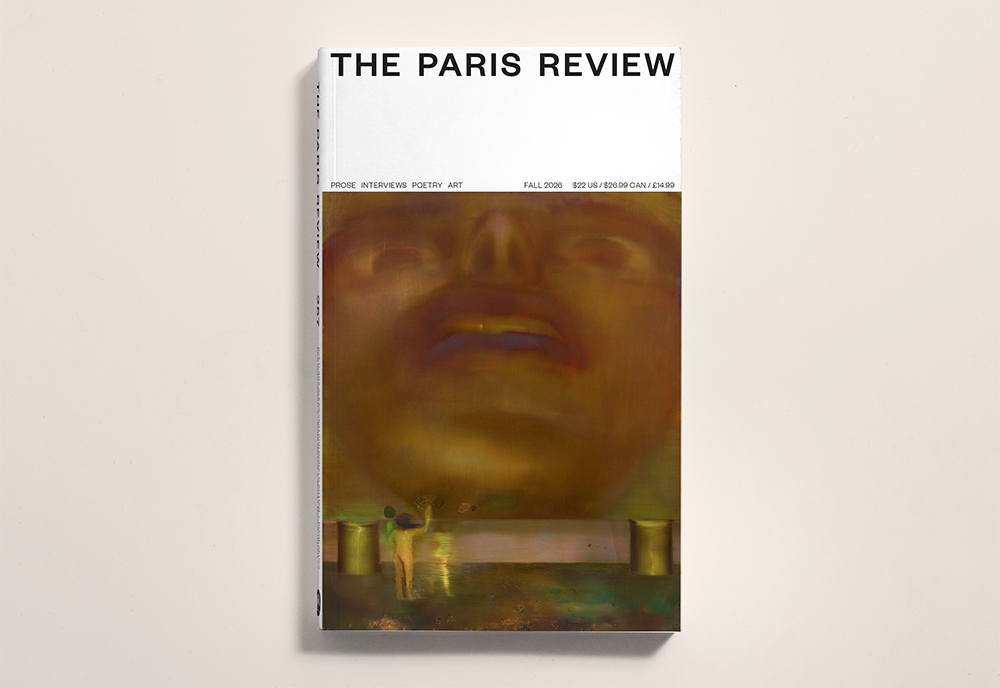
Issue 253, Fall 2025
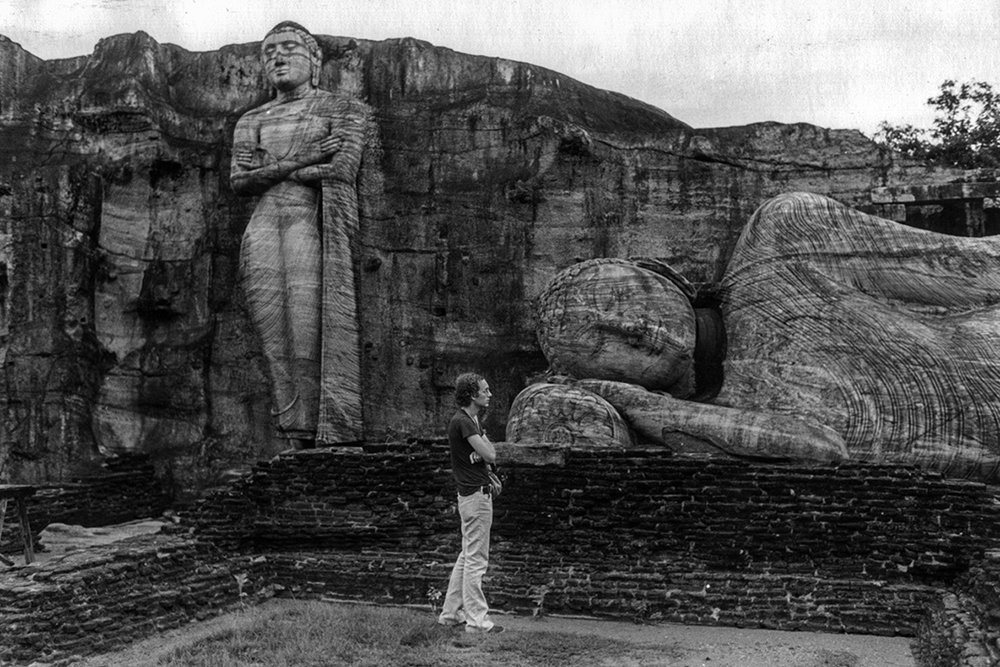 At the Gal Vihara in Polonnaruwa, Sri Lanka, 1979. Photograph by Nina Subin. All images courtesy of Eliot Weinberger.
For almost half a century, Eliot Weinberger has made an art of what might be called the impersonal essay. Scholarly articles, monographs, and ancient texts furnish the source material for these works, whose titles frequently resemble encyclopedia entries—“Agate,” “Angels,” “Empedocles,” “Ice,” “Lizards,” “Muhammad,” “The Sahara,” “Wrens,” “The World.” Some evoke the form of chronicles or oral histories; others read like excerpts from antiquarian commonplace books, accumulating aphorisms and anecdotes from various—often non-Western—civilizations. A reader opening Works on Paper (1986), Karmic Traces (2000), or The Ghosts of Birds (2016) to any page might come across a Tang dynasty governor’s address to the crocodiles of the Wu River; an account of the travels of Jón Ólafsson from Iceland to India in the early seventeenth century; or the final words of a Yorkshireman who spent forty-nine years in bed. There are many “I”s to be found in Weinberger’s literary essays, but the first person is reserved almost exclusively for others.
In the UK and Europe, Weinberger is best known for his writings on American politics—especially for “What I Heard about Iraq,” which compiles quotations from politicians, military personnel, aid workers, and Iraqi civilians into a litany of overheard speech (“I heard the vice president say, ‘I really do believe we’ll be greeted as liberators’ ”). First published in the London Review of Books, where Weinberger has been a frequent contributor ever since, the essay has been adapted for the stage and set to chamber music, and, in 2006, was read publicly around the world on the third anniversary of the invasion of Iraq. A series of rueful dispatches on 9/11 and the War on Terror, with titles like “Republicans: A Prose Poem,” are collected in What Happened Here (2005).
He may be better known at home as a translator of other writers’ works—most notably nine volumes of poetry by Octavio Paz, including Eagle or Sun? (1951, first translation 1970), A Tree Within (translation 1988), and Sunstone (1957, 1991), as well as Vicente Huidobro’s Altazor (1931, first complete translation 1988) and poetry by Bei Dao. Many college students first come to read Weinberger, a Yale dropout, through his sardonic commentary on various English renditions of a four-line Tang dynasty poem in “Nineteen Ways of Looking at Wang Wei,” which still regularly appears on syllabi for translation studies and world literature courses.
Weinberger was born in 1949 at Doctors Hospital, on the Upper East Side of Manhattan, and spent his first three years in Brooklyn, near Grand Army Plaza, before his family moved to Westchester County. He is adamant that he has never been a part of a literary scene, but in his small magazine Montemora, which he published in the late seventies and early eighties, and in the anthology American Poetry Since 1950: Innovators and Outsiders (1993), Weinberger sought to foreground an earlier generation of avant-garde writers whose poetics and politics informed his own—among them Charles Reznikoff, Muriel Rukeyser, and George Oppen. Since then, he has edited anthologies of classical Chinese and contemporary international poetry for his own publisher, New Directions. He describes his many book introductions and the pieces he writes for magazines as “oranges and peanuts for sale,” the title of his 2009 collection. Visual artists like Vija Celmins and Terry Winters have asked Weinberger to write texts to accompany their work; these collaborations have resulted in some of his favorites of his own essays, on birds, stars, and the color blue.
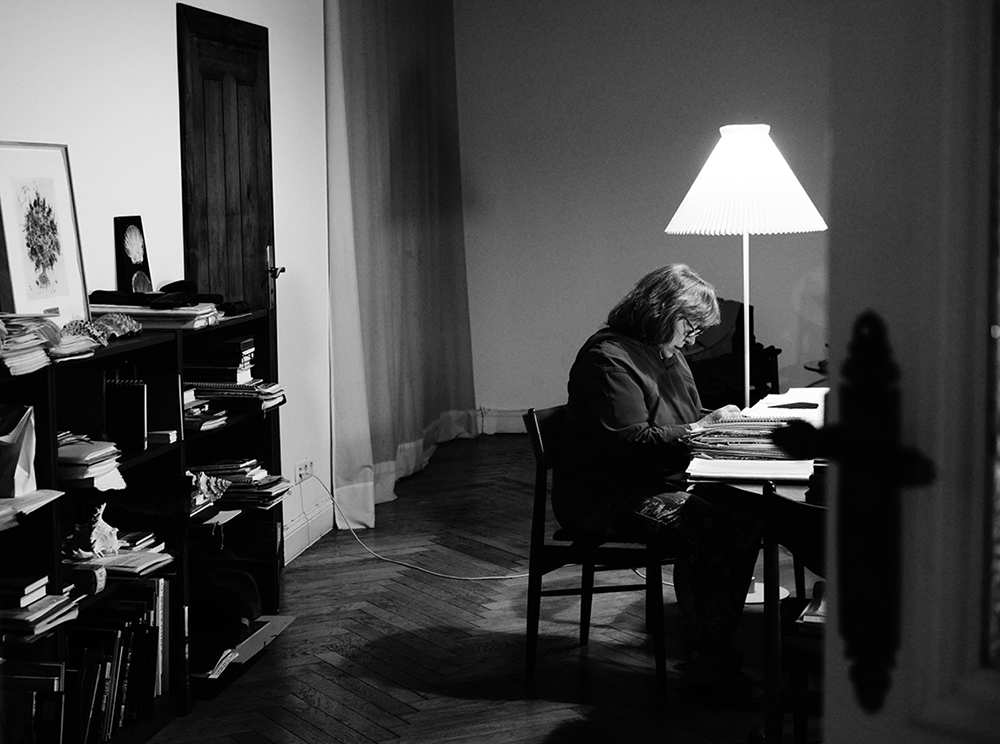
We spoke over four afternoons in late winter and early spring at Weinberger’s home in the West Village, where he’s lived with his wife, the photographer Nina Subin, for forty years. The house can be identified by the small handprints on the sidewalk outside; these once belonged to their son, Stefan, now a filmmaker and cinematographer in LA, and their daughter, Anna Della, a writer and editor who lives nearby. The house is decorated with travelers’ curios—illuminated manuscripts from Turkey (“probably fake, but beautiful”), Indian glass paintings, Tantric drawings. Over the living room mantel is a map of the Jain cosmos. On my arrival, Weinberger would brew a pot of coffee and lead us up the stairs to his orderly office, which overlooks a dry cleaner across the street; there we could smoke freely (he has made do with American Spirits since Nat Shermans were discontinued a few years ago) and talk for hours. In person, Weinberger is wry, observant, alternately quizzical and irascible, and—though he has an enviable memory for literary dustups, political events, and the details of his travels—is taciturn, even cagey, about his own psychology. When I suggested that his work, which appears to hold personality at a certain remove, might offer something like a fourth-person perspective on the world, he replied, “There’s lots of first persons, but I’m the last person.”
INTERVIEWER
I heard that you declined to be interviewed for the Review years ago because the editors wanted to bill it as an Art of Translation.
ELIOT WEINBERGER
I just thought they were sticking me in the wrong box. I’ve never thought of myself as a translator, more as someone who has done some translations. Of course, I worked with Paz for thirty years, and I did Huidobro’s Altazor, three times actually, and Villaurrutia’s Nostalgia for Death (1938, 1992) and some other things. Bei Dao I translated because he kind of made me do it. But my last big translation, the Borges book of essays, was twenty-five years ago. I was never a Latin Americanist and never a real translator, wasn’t somebody you could hire to do a new novel by Vargas Llosa or something.
INTERVIEWER
But isn’t there a case to be made that even your essays are translations? You’re taking sentences from a source material and putting them in your own style and form.
WEINBERGER
Well, that gets us into that whole idea of translation theory—you know, every act of reading is a translation, every text is a translation, and so forth—which is true enough on a very basic level, but I don’t find it all that interesting or useful. I prefer the old-fashioned definition of translation as taking something specific from one language and moving it into another.
INTERVIEWER
When did you start writing essays?
WEINBERGER
After my parents died, I found a box of my old school papers, and one of them was a report I’d written in junior high school, for “American Civilization” class, on fallout shelters, which were then all the rage in suburban America—people digging up their backyards to protect themselves against nuclear war.
INTERVIEWER
I hear they’re making a comeback.
WEINBERGER
What amazed me about it was that it’s exactly in the style of much of my writing now—a collage of facts and quotations and a certain kind of irony, lampooning the people pushing these shelters. There’s even a poem in there. Of course my vocabulary is now somewhat larger, but you know what Auden said, that the sign of a minor writer is that their style never changes …
INTERVIEWER
So you never had to work to find your voice?
WEINBERGER
Well, I spent my twenties doing more reading, translating, editing, and traveling than writing. I wrote bad poetry.
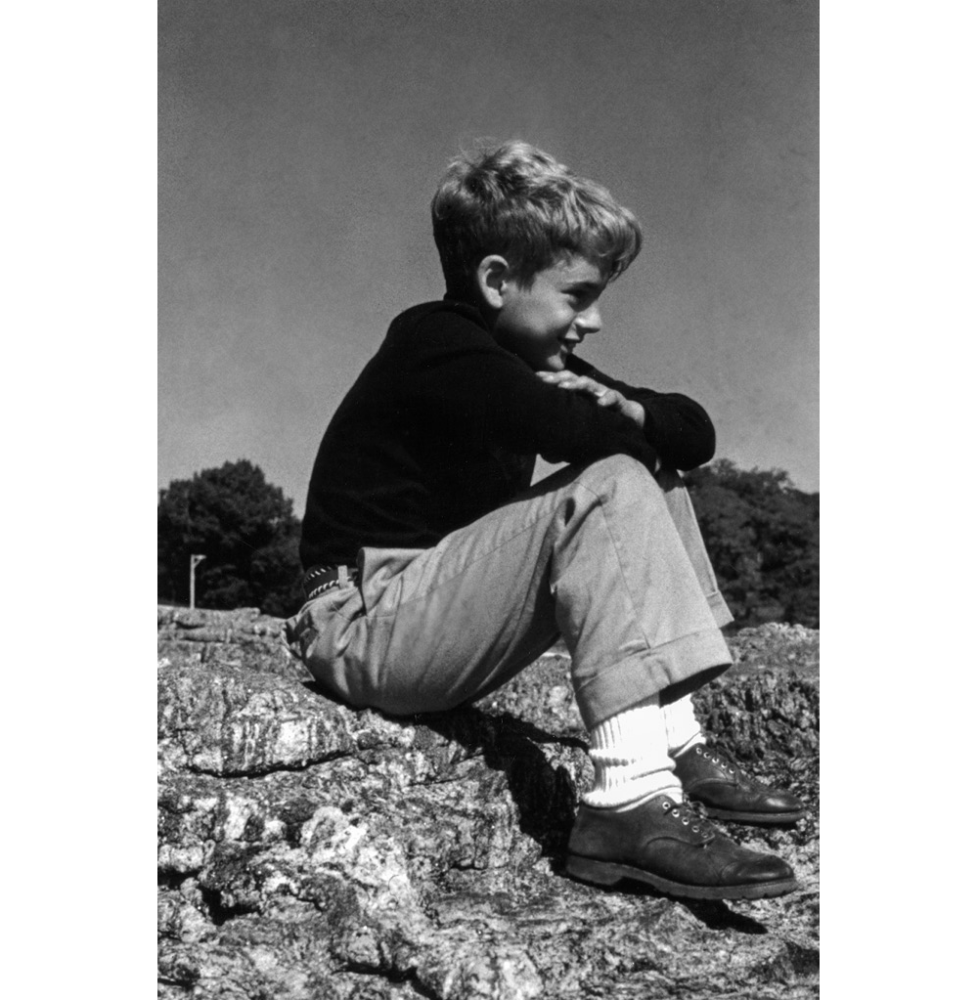
Ca. 1954.
INTERVIEWER
What kind of bad?
WEINBERGER
Just bad lyric poetry that was obviously under the influence of what I was reading—George Oppen, ethnopoetics, Chinese poetry. I remember Oppen, who seemed to me a model of how one should live as a poet, saying of some poet he thought of as mediocre, “He’s not scared enough of poetry.” I think I held poetry in too high regard. I was very unhappy trying to be a poet. I didn’t have the imagination. But when I turned thirty I realized that I could take things that were already in existence and do something with them. It was like painting a still life as opposed to being Hieronymus Bosch—arranging objects into a composition and painting them in my own way. As soon as I turned to prose, I was happier. Though from the beginning my prose—like that early essay “The Dream of India”—tended to look more like prose poetry.
INTERVIEWER
How did you come to write that?
WEINBERGER
I was following this trail of curiosity about Columbus, wondering what, when he thought he was going to India, he imagined he was going to find. So I started reading up on things about India that were written before 1492. Most of the essays that I call “elemental” begin with that kind of question. My essay on tigers started with the question of whether Blake, when he wrote “The Tyger,” had ever seen a real tiger. That got me looking into the mythology and image of the tiger in the West.
INTERVIEWER
What makes an essay elemental?
WEINBERGER
The elemental essays are about timeless things—the proverbial “news that stays news”—in contrast to my political writing. I guess you’d call them documentary prose poetry, if you have to have a label. Unlike commissioned pieces, like reviews or introductions, they’re written entirely for myself, and they’re where I feel I have total freedom. An Elemental Thing (2007) was intended as a serial essay, modeled on the American serial long poem—Pound’s The Cantos, Zukofsky’s “A”, Olson’s Maximus Poems, and so on—where the subjects keep changing but certain phrases and themes keep repeating. Other sections were added to the series in subsequent books. In Spain, they just did a collected “elementals,” and I organized it into a kind of mandala, with four wings and the essay about the vortex at the center—it’s a book that I hope people will open at random, rather than read sequentially. People always ask, “Who’s your ideal reader?” Mine is somebody who reads a few pages and then falls asleep and has a fantastic dream.
INTERVIEWER
I’m trying to imagine you writing here at your desk. I’m picturing a huge tower of books from obscure libraries that you’re collaging from as you go—you know, some ancient Greek texts about ant colonies in India or whatever—and a complex system for taking notes on all the source materials … Is that how it is?
WEINBERGER
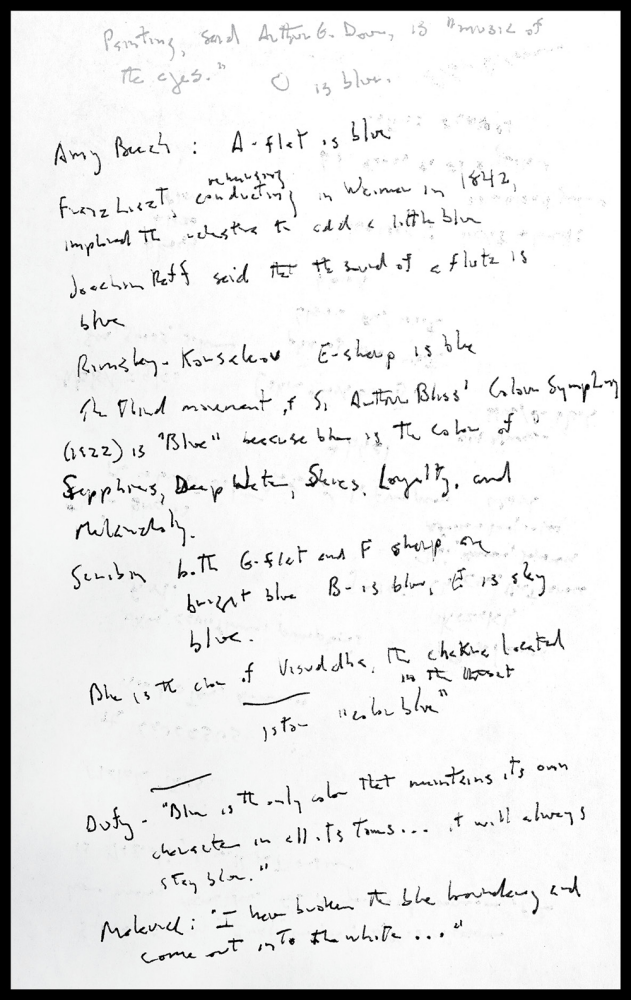
Not exactly. I tend to do most of the research before I start. That can take months. And I’ve never kept a notebook or taken notes, because I can’t read my own handwriting. When I have to write little to-do lists, I do it in block letters.
INTERVIEWER
So where do you keep the research?
WEINBERGER
It’s all here.
INTERVIEWER
Are you pointing to your giant cranium?
WEINBERGER
No, no, I’m pointing to the books on the shelves, which are incredibly OCD-organized—they become my external hard drive. I don’t use libraries, as I have no academic affiliation, and the New York Public Library at Forty-Second Street … I can’t deal with that. Luckily, I have a lot of books around. As I write, I’m trying to remember where I’ve read something, so there is a chance that I’ll lose something forever, but mostly all the stuff I’ve read kind of flows through. It’s not like I’m scouring hundreds of books to find a single phrase from the Latin. I’m dependent on what they call secondary sources. I prefer to use work by scholars who aren’t good writers, because then I can extract information and write it in my own way, without any interference. Anything too elegant and I can’t use it.