Issue 253, Fall 2025
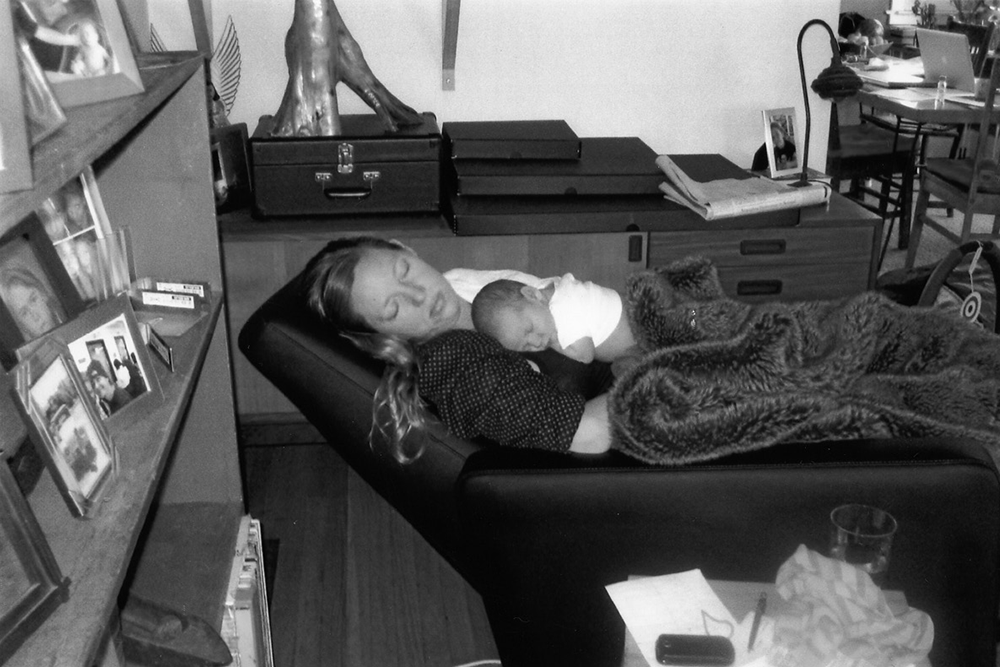
At home in Los Angeles with her son Iggy, 2012. All photographs courtesy of Maggie Nelson.
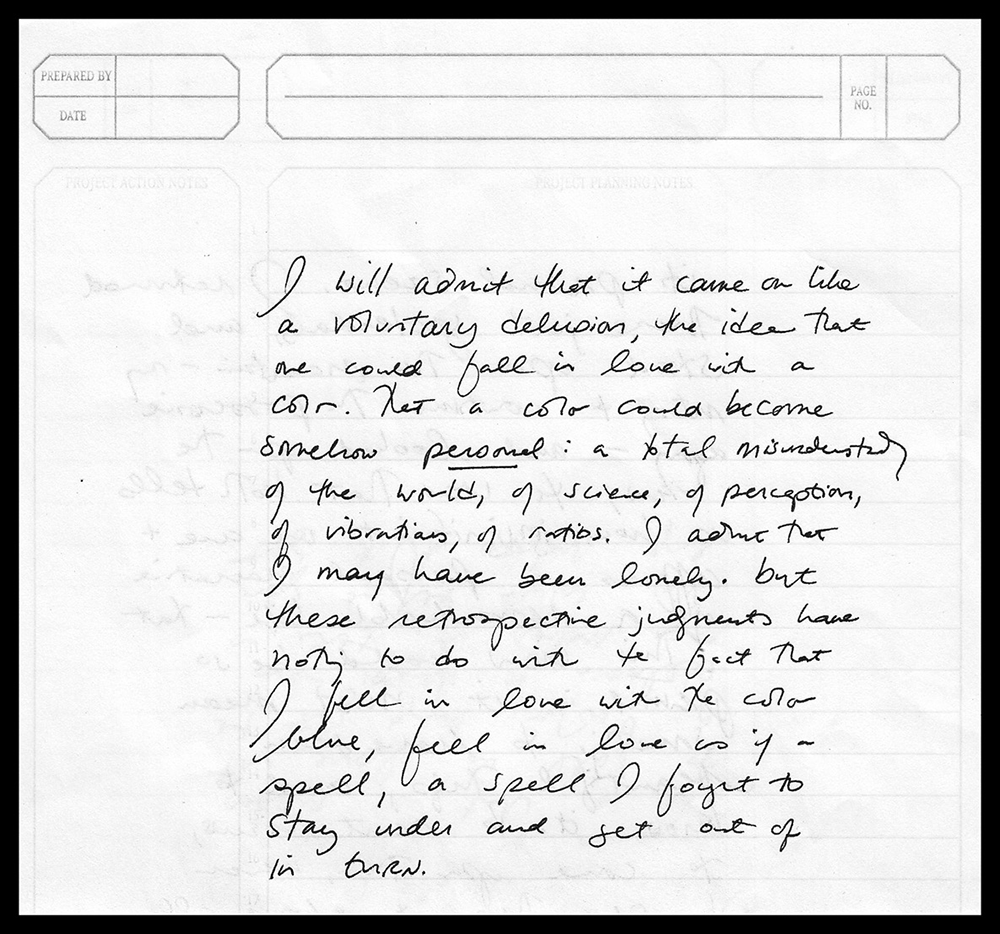
Across three decades and more than a dozen books—including the narrative documentary poem Jane: A Murder (2005); the lyrical sequence Bluets (2009), about heartbreak, pain, and the color blue; and the assemblage of essays Like Love (2024)—Maggie Nelson has cast her relentlessly curious and sometimes maddeningly scholastic eye on love, art, narrative, embodiment, and form. Even her most academic writing has the bright hue of the personal. Her critical work assimilates a vast spectrum of sources in its forensic approach to monumental themes such as cruelty and freedom; almost all her books straddle genres, sometimes in the span of a single page.
She remains best known for The Argonauts (2015), a slender, allusive work of “autotheory” about her relationship with her partner, the gender nonconforming artist and writer Harry Dodge, whom she married in 2008, and her pregnancy in 2011 with their son Iggy. The book earned ardent praise for its rangy, capacious account of finding love and providing care within the imperfect systems of marriage and gender; it also inadvertently introduced the unsuspecting masses to Donald Winnicott and top surgery. It has since become a staple of liberal arts syllabi—the gemlike apotheosis of the contemporary memoir boom, or its precocious child.
Nelson was born in 1973 in San Francisco; her father, an employment lawyer, and her mother, a housewife at the time, divorced when she was eight. When she was ten, her father died suddenly of a heart attack, a loss she has returned to in several of her books, most recently in the memoir Pathemata, Or, The Story of My Mouth (2025), about her history of oral pain and her ambivalence toward her own volubility—as a child she was known as a chatty Cathy. She attended the Urban School of San Francisco and then Wesleyan University, where she studied with Annie Dillard and the feminist scholar Christina Crosby, both of whom became lifelong friends; Crosby, who suffered a life-altering accident in 2003, and who died in 2021, is a figure in several of Nelson’s books.
Nelson began her writing career as a poet and a scholar of poetry; her Ph.D. dissertation, written at the CUNY Graduate Center, was published in 2007 as Women, the New York School, and Other True Abstractions. One can see, in the poetry books Shiner (2001), The Latest Winter (2003), and Jane, the eccentric forms and eclectic source materials that have come to define Nelson’s prose style. Jane is named for Nelson’s maternal aunt, whose brutal murder when she was a first-year law student in 1969 remained long unsolved despite the interest it drew from the true crime industry. The book became the first in what Nelson has retrospectively called a trilogy about violence and spectacle: The Red Parts, an account of the trial of the man belatedly accused of Jane’s murder, followed in 2007, and The Art of Cruelty: A Reckoning in 2011.
Our in-person conversations took place this past March over the course of three days in northeast Los Angeles, where we first met on the generous porch of the bungalow she referred to as her “MacArthur house,” after the prize she was awarded in 2016 for “forging a new mode of nonfiction that transcends the divide between the personal and the intellectual.” The home is convivial, boisterous, and inviting: vaulted ceilings, the aquatic glimmer of a swimming pool out back, and, in the kitchen, a California-size fridge featuring an assortment of domestic ephemera (a typed list of “positive childhood experiences,” a “Hi I’m lesbian” sticker, pictures of Nelson, Harry, Nelson’s stepson, Lenny, and Iggy). Elsewhere small objects convene by type—a herd of miniature ceramic pigs meeting on the bookshelf, stones and stonelike orbs lining the white mantelpiece.
Our exchanges were punctuated by minor disruptions, including a Zoom call with her students at the University of Southern California, where she’s taught since 2017, the daily school pickup, the long glissando of a leaf blower (“You’re about to witness a Los Angeles phenomenon,” she warned), and the yap of Billie, her dopey and besotted poodle, whom I was gently informed I’d been misgendering. In response to my questions, Nelson was at once precise and discursive, friendly and skeptical, direct and elliptical. She had little interest in answering inquiries as to when and where she writes; my more personal questions were met with mild indignation, sighs, blushing, laughter, or the comment that she’d already written on the topic in hand. “I don’t know” became such a frequent refrain that at one point I was compelled to assert that not knowing seemed important to her, to which she replied, “Yeah, it is.” At such moments, I found myself thinking of Winnicott’s theories of the false self, the facade one advertises in defense of the private interior. But she was also emphatically unfussy, giving, and game. On arriving at her door in the rain, a stranger with suitcase in tow, I was furnished with lunch before I learned it was her birthday.
INTERVIEWER
Have you noticed that Bluets and The Argonauts spawned a certain kind of writing? I’m thinking of essays that might combine theory and autobiography in vignettes, but perhaps without the precision of your own …
MAGGIE NELSON
I’m familiar with the phenomenon, yes.
INTERVIEWER
What do you make of it?
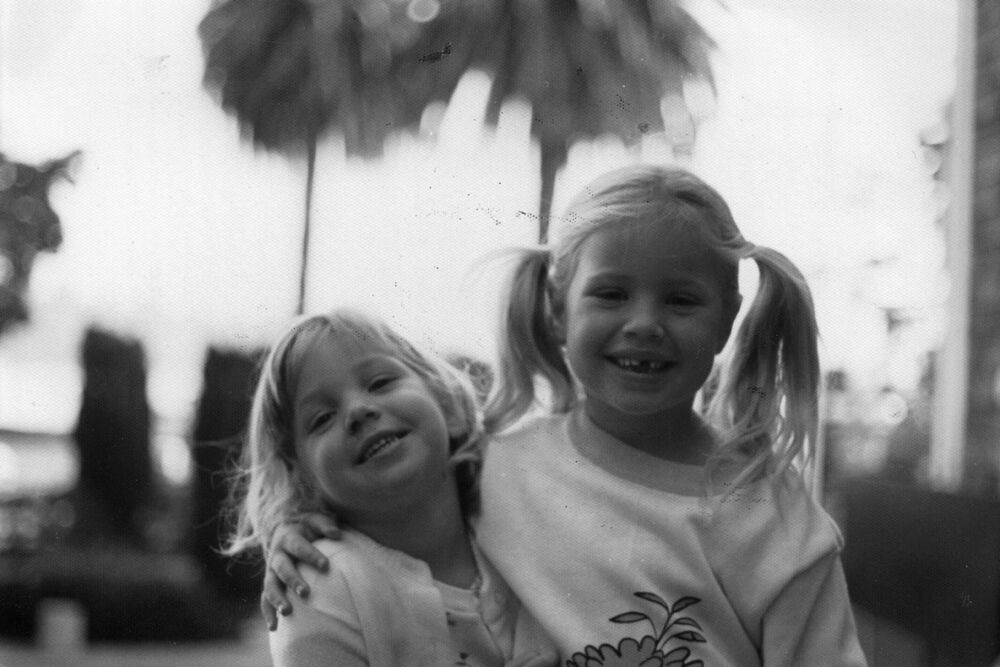
Nelson, at left, with her sister, Emily, in Sausalito, California, ca. 1976.
NELSON
There are various forces that can reduce rigor, which might include laziness or soft-headedness but more often have to do with insecurity or a desire to impress. The thing is, you have to really want to understand what you’re referencing. It’s easy to drop names—as if “Freud” stands in for sexist villainy or something. I mean, have you read Freud recently? He’s just endlessly fascinating. I think people have a hope and a prayer that if they toss in a bunch of quotes, or—and I certainly did not invent the numbered form—add numbers to a piece, it will all magically hang together. But as a writer you have to be willing to say, Yeah, that’s not good enough, over and over and over again.
INTERVIEWER
What did that process look like for The Argonauts?
NELSON
Well, it took me a long time to realize I was writing a book. I had written two papers—a tribute to Eve Sedgwick’s work and a piece on my friend A. L. Steiner’s art show Puppies and Babies—and then I was just writing down things that seemed notable, interesting, annoying as they happened. A lot of my work has been like that—I have to go on instinct as to why this particular anecdote might come to mind, and I don’t really know what the weave of them is going to make up. I recall that the first draft had a lot of petulance in it that I had to get rid of, a lot of low-grade complaint about gendered experience in the world. I had to make it so that the point wasn’t that I’d had an irritating ultrasound technician or that there was a weird person who wouldn’t take Harry’s credit card—but I also didn’t want to just say, Maternity is a philosophical experience that everyone should be interested in. It’s like, who cares? There needed to be connections along the way, and a rising sense of stakes, to make it interesting not just as writing but as a series of thoughts. As Barthes writes, “Text I is reactive, moved by indig‑ nations, fears, unspoken rejoinders, minor paranoias, defenses, scenes. Text II is active, moved by pleasure.” You have to work on Text I for it to lose its “reactive skin,” to get to Text II.
INTERVIEWER
Some people might imagine that your work consists mostly of arranging.
NELSON
I do do that. But whenever you do a kind of arranging project, people tend to talk about it as “collage,” as if the sequence of the material doesn’t matter. If Bluets and The Argonauts work, it’s because of the plotting that’s not visible, the order in which information is dispensed.
INTERVIEWER
What dictates the order?
NELSON
Bluets and Pathemata share a similar compositional principle—which is maybe a little cheap, I should probably stop doing it—where I’ll start telling a story and digress before returning. The numbers in Bluets—and this is stolen from Wittgenstein—sometimes mean that we’re following a hot proposition, but at other times they signify a total change of gears. When you write like that, the effort in revising is to read the manuscript like a dummy, like you’ve never seen it before, so you can test for when you’ve veered too far. It has to not be so far that the book goes slack, but there also has to be enough digression that you can get in a lot of disparate material.
With The Argonauts, the temporal structure was the biggest challenge. I had to ask myself, Is it tolerable that I’m pregnant on this page but I already had the baby ten pages back? There was also the structure that has to do with the history of ideas—concepts that needed to be introduced before other ideas could be entertained, like Winnicott’s idea that, by necessity, someone must hold the baby well enough that it survives, and that person is not always the baby’s biological mother. I wanted to bring in, one by one, this symphony of people who might serve as mothers in one’s life—the “many gendered-mothers of my heart”—to lead up to the moment in which Harry’s adoptive mother dies.
INTERVIEWER
Did The Argonauts always begin as it does?
NELSON
I shuffled things around so much that I don’t know what “always” means, but at some point, all the temporal to-ing and fro-ing was killing me, so I decided to find the earliest anecdote, put a date on it, and let the text unfurl from there. I’ve read that some people feel that the start of the book is some kind of challenge or provocation—“Here, decide whether to keep reading after this anal sex scene.” The thing is, I really, really hate writing that pulls its punches, stalls out in exposition that we don’t need, and so I liked how that particular passage felt very present, very alive. I wasn’t quite done with The Argonauts when I read Paul Preciado’s Testo Junkie, and I felt a lot of kinship with its project, its vacillation between high theory and personal, sometimes very sexual chapters. The price for a sex scene in that book might be fifty pages about the history of the birth control pill—which you’re into, and you’re happy to read, but then you’re like, Oh good, we’re back at the hotel. Barthes says that the erotic part is where the garment gapes. I like a lot of writing that’s full frontal—I’ve taught whole classes on Marquis de Sade and pornographic prose—but I probably do a little bit more of the garment gaping.
I might also have been thinking, in that opening, about Anne Carson’s writing on Sappho and the “sweetbitter.” Part of falling in love fast and hard is that at some point you hit the bitter, the chasm where you realize you’re two different people. I liked the way that opening had the fast part of falling in love, and that it could then be followed by a conversation about language that reflected the chasm.
INTERVIEWER
You write in the book about Harry’s resistance to the first draft, which you then revised. What were those changes?
NELSON