In 1969, Eve Babitz had yet to publish Eve’s Hollywood and Slow Days, Fast Company, the collections of autobiographical vignettes that established her as the consummate chronicler of seventies Los Angeles, and which, since being reissued over the past decade, have amassed for her a new and devoted fan base. She was twenty-six years old and working as a collage artist, having designed album covers for bands like Buffalo Springfield and the Byrds. Already famed for a photograph in which she played chess, nude, with Marcel Duchamp at the Pasadena Art Museum in 1963, she had been at the center of the uniquely Los Angeles nexus between Hollywood, the art world, and the music industry since birth. Her mother, Mae, was an artist who often depicted LA’s landmarks, and her father, Sol, was a violinist who performed with the 20th Century–Fox studio orchestra; Igor Stravinsky was her godfather. That year, guests to the Babitz family’s Christmas included an eleven-year-old Michael Jackson, accompanied by his parents.
Between that September and the following July, however, Babitz kept a record of her life that is at once gossipy, hilarious, and vulnerable. Her only surviving journal, it has remained unpublished; stored in a cardboard box in Babitz’s apartment, it was acquired by the library at the Huntington, along with the rest of her archive, in 2021, a few months before her death. Excerpted here and lightly edited, it is in part an account of her self-transformation into a writer, revealing her growing disillusionment with the rock-and-roll scene—the violence at the Altamont Speedway festival, where four people died during a Rolling Stones concert, occurs midway through the journal—and her voracious reading of writers such as Anthony Powell, Virginia Woolf, Isak Dinesen, and George Orwell. Babitz began writing it while entangled in affairs with the music producer Earl McGrath, who was inconveniently married to the countess Camilla Pecci-Blunt, and Ahmet Ertegun, the head of Atlantic Records, among many others who appear and disappear from the journal. Her circle of acquaintances included John Gregory Dunne and Joan Didion (or “Mrs. Dunn,” as Babitz seemingly intentionally misspells her name), who in 1969 had just garnered notice for Slouching Towards Bethlehem and would publish Play It as It Lays the following year, and with whom she would maintain a complicated relationship; Diane Gardiner, publicist for the Doors; and the actor Harrison Ford, referred to as “Harry” in the first entry, who was then working as a pot dealer and carpenter. But we recommend you let most of the names, of which there are many, contribute to the blur that one experiences at a good party.
—The Editors
Friday, September 19, 1969
This is the second diary I’ve started in a month. This time I decided to get an actual book instead of writing on pieces of paper that fall all over the place. I [started] this because I read Virginia Woolf’s diary and, undaunted, decided, what the hell? The other diary, by the way (the one on the loose papers), was enormously pretentious too, so this one I’ll try and make better.
Haven’t seen Earl [McGrath] since the horrible dinner party Camilla McGrath had where I persuaded Herbie Greene it was time to go and then found out we hadn’t had coffee yet. Earl was mesmerized with one of those fits where he says, “I don’t care a bit—it’s just such bad manners to Camilla that’s all.” Like he did the time Harry [Harrison Ford] almost hit him in front of the Tropicana.
Went to a party at Myrna [Reisman]’s Sunday and saw everyone including Myrna and Frank [Cook] and Diane Gardiner and Jac Holzman, whose wife is turning into more of a radical anarchist the older she gets. They have a beautiful daughter who has mint green eyes. I went with Tom [Marshall], who’s in P. G. & E. [the band Pacific Gas & Electric], and when we parked in front of Myrna’s, this other group of people were entering as well, one of which was Neil, the agent who I think is a cold-blooded mother while Myrna said she thinks he’s a mensch.
I’m not quite sure but I think being hypnotized did me worlds of good or at least half a world of good. I’m very mistrustful of [the hypnotherapist] Gil Boyne and absolutely despise his taste in art, but nevertheless I feel more confident than ever before. He didn’t think it was funny when I told him what I wanted (i.e. to be good & beautiful or at least be in a state of grace, for God’s sake) and I didn’t mean it to be funny. I just wanted to simplify but he’s so positive that everyone hates their mother and father, and I just can’t get any real hate out there for my ma and pa, no matter what—or for anyone really, except Earl and that’s only temporary.
Neil, the agent mother-mensch, is supposed to call today. Yesterday he was supposed to come for dinner, and I spent a good part of the day buying the chicken and planning what to have, and then at 4 he calls and says he can’t make it. [He said he’d] take me out for dinner this weekend, and that he would call me today. I thought I’d wait and see, but when Barry [Farrell] called and asked me out for tonight, I had a moment’s hesitation and then accepted. I want to see Neil—I like him and am fascinated: he calls and says “Hi” without saying who and I always know who—it’s very intimate. So if he wants to go out tonight, I don’t know what to tell him about why I can’t, especially since I want to see him again and he’s so gruff.
I saw the man who took his clothes off in the laundromat again today. He looks like Jack Micheline and maybe he is—I’ll look closer next time.
I’m working on the P. G. & E. thing—I hope and pray it comes out like a Magritte.
Monday, September 22, 1969
Neil never called. I will have to relinquish all my romantic notions and give up on him. I suppose I handled it badly, though heaven knows what handling anything well might be. Even Myrna, who I thought had the happiest marriage in the world, called yesterday morning to ask if I’d seen Frank because he hadn’t come home [last] night. It struck me as sad because Myrna was terribly upset. I thought she might do something rash so I told her not to do anything. Shit. I really wish Frank would behave—he almost gave me faith that you can be groovy and married.
This week I have done nothing that I regret horribly, which may be due to Boyne. I can only think of … let’s see: I blew my cool over Gram Parsons (telling him he reminded me of Rudolph Valentino—oy vey!). So—but no really hideous things, and, even though I got drunk, I was not disorderly.
Tuesday, September 23, 1969
Last night I went to an historic occasion. It was a party for Donovan at the palatial home of Tom Smothers. There were 10 parking attendants, 5 butlers passing around the most greatest hors d’oeuvres, and 4 bars. There were cheeses of every description, mounds of shrimp, crab, and lobster, barbecued shish kabob, hamburgers, apples. There were two rooms with color T.V.s for people to watch the first Music Scene, in which the Beatles, Crosby-Stills-Nash-Young, James Brown, and the Committee appeared. There [was] all the underground press (Tom Nolan and Ginny [Ganahl] took me) and Jerry Hopkins, Liza [Minnelli], John Carpenter, Miss Judy Simms, et al. Diane wasn’t there for some reason. Pop stars: Cass [Elliot], Stills, Donovan, Monkees, Graham Nash and Joni Mitchell, and the like. Phil Ochs was there, won the door prize [for giving] a vitriolic speech about how here we were eating everything and people were being killed in Vietnam and starving in Biafra. Perfect Scott Fitzgerald intro to Donovan.
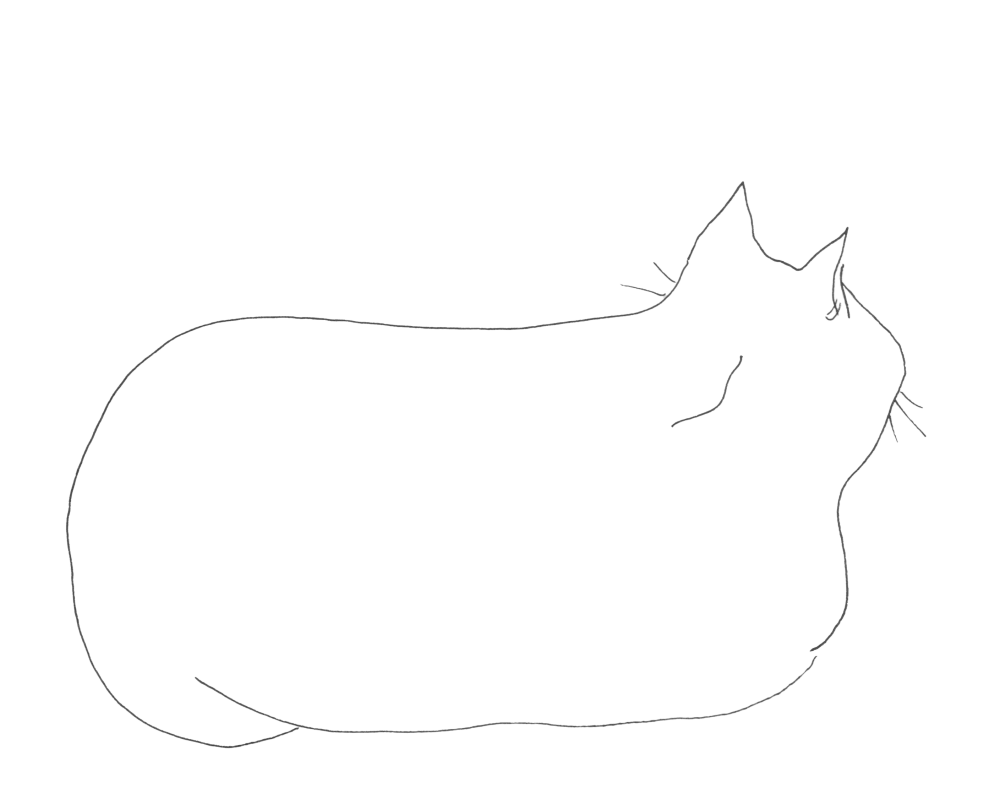
Drawing by Eve Babitz. Courtesy of the Estate of Eve Babitz and the Eve Babitz Papers at the Huntington Library, Art Museum, and Botanical Gardens.
I met a charming guy named Marc Foreman who drove me home, and we talked but he’s been living with a girl for 10 months and I don’t believe in magic.
Today Herbie Greene and I went to 20th [Century–Fox] to lunch with David Giler, and I saw all the stars like John Huston in the commissary and it was quite gay, though I find myself getting desperately impatient with Herbie and his speed talk going on and on and on and on about his career, telling me the same stories over and over. I get sullen and nasty, and Herbie refers to it as “one of my moods.” We also went to a shitty adv. agy. in Century Plaza, and then I actually let out this positively unmuffled, desperate, animal moan, like a dog who’s tied to a post, so finally I got to come home.
Boyne didn’t feel well yesterday so we gossiped and I didn’t pay. Waste of time.
I’m on my last C. P. Snow book.
Friday, September 26, 1969
News:
Thought about last time I saw Boyne and I’m sorry to say that, upon reflection, he seems to be a dirty old man, and not just dirty either—FILTHY. He tried to grab my tit on the way out and that’s why I mention it. I’m sending him a postcard which says, “Dear Mr. Boyne, I have to break our appt on Monday because I’ve gone to Spain with Ahmet [Ertegun] and 14 monkeys.”
Neil called before I went to Earl’s party. Thank heavens I had something to do, otherwise I would have let him come over, fuck me, and leave in .05 minutes. I just can’t see him anymore, I guess, because every time I do, I always get the impression he’s right to do that and he just can’t be.